17 Dec 2011

Indian Cricket - Stuck In The Same Grove Since Ages

Is the first thing that comes to mind reading this in today's The Hindu: Are many of the current lot just ‘flat-track bullies'? 
Several young Indian batsmen too have been found wanting outside the sub-continent.
Suresh Raina and Virat Kohli have struggled against the bouncing ball. These batsmen have been found wanting in footwork and have consequently been opened up.
The lack of solid back-foot play and the inherent inadequacies while coping with lifting deliveries have impacted the other attributes of their batsmanship as well. The short-pitched-full-length mix, with swing, has sent these batsmen packing.
“And the modern batsman is so well protected,” fumes spin bowling legend and former India captain Bishan Singh Bedi.
Wasn't this complaint brought out of the closet and aired regularly since I don't know when?  How many times have we heard this: "Indian batsmen don't get to play on fast wickets in the subcontinent and hence become pace bowlers' bunnies when they go abroad".  And to think it still goes on.  And it seems to have only got worse and spread to other teams too!  But not a problem, we'll dumb it down by introducing inane versions like Twenty20.

16 Dec 2011

Setback For Aadhaar

Aadhaar: time to disown the idea
“…The Committee categorically convey their unacceptability of the National Identification Authority of India Bill, 2010…The Committee would, thus, urge the Government to reconsider and review the UID scheme.…”
This was the conclusion of Parliament's Standing Committee on Finance (SCoF), which examined the Bill to convert the Unique Identification Authority of India (UIDAI) into a statutory authority. With this categorical rebuff, the SCoF dealt a body blow to the Aadhaar project, which is being implemented from September 2010 without Parliament's approval.
Technically speaking, the SCoF report asked the government to bring forth fresh legislation before Parliament. However, a careful examination of the report shows that it does not just reject the Bill, it also raises serious questions about the idea of Aadhaar itself. In fact, the report so comprehensively questions the idea that any effort to introduce fresh legislation would require, as a prerequisite, a re-look at the foundational principles on which the project was conceived.
Apparently, the Committee worked well, though they came up with a 'No': 
Ironically, till last week, the same SCoF had come in for profuse praise from none other than Nandan Nilekani himself. He had said in August 2011: “I have had the occasion to…make a presentation on more than one occasion to the Standing Committee…let me tell you they do an extraordinarily thorough job. I am very, very impressed with the quality of questions, the homework, the due diligence, the seriousness that they view these things with. And it is very bipartisan, you can't make out who is from which party because they all ask on the issue. So when you have such an excellent system of law-making...Let us respect that, let us give them the opportunity to call all the experts for and against and let them come out with something. They are the appropriate people, they are our representatives.”
The “representatives” have now spoken. 

This Too Happens In Bangalore


The stories of child beggars, who were rescued in the City on Thursday, are heartrending. Though in a few cases, the parents had pushed their children into begging, in a majority of cases, they had handed over their children to handlers, who in turn forced them into begging.
In many cases, the mothers used to hand over their children to the handlers and go to work. The handlers would come in the evening, leave the children at their homes, give the mothers some money and go away. Such children used to weep and quarrel with their mothers later on. 
The mothers would feed them with a high dose of cough syrup or other medicines to put them to so sleep, the officer said. In some cases, the parents of rescued children expressed utter shock on knowing that their children had been pressed into begging.
Details: Over 200 kids rescued from begging racket.  Of the rescued children, 64 were boys above 5 years, 40 were girls above 5 years and 106 were below 5 years, apparently.  Sad stories.

Moderating Inflation Gives Food For Harmless Fun


Since [the early 1970s and between late 1970s to early 1980s], high food inflation episodes were relatively short-lived, with the longest one lasting 27 months in the early 1990s. Even in the severe drought conditions of 1987, the double-digit food inflation episode lasted just 18 months.
All of that pales in comparison with the latest spell of 38 months when inflation stayed above 10 per cent, despite a record 13 rate hikes by the Reserve Bank of India since March last year.
38 months - a long time.  But lots of people were concerned about it as this table from a July 2010 post shows:


A Friedman Unit  by any other name would amuse as much.

The 3G Scam?


They need to be.  Their exposure is almost 1 lakh crore.  Half of that may be on account of loans to the winners of the 3G auction.  So one can argue that the auction only fetched half of what is claimed, at present.  And PSU banks - implicitly backed by the government - funded a large part of the 3G auction amount as the report points out.  SBI itself has an exposure of Rs 23,000 crore.  What if the loans go bad as some are already?

No wonder one never hears calls for privatisation of PSU banks. They are sitting ducks for industry to get loans from.

Iraq, Libya... now Iran?


Many in the UK swore that it would never happen again. A hugely unpopular decision to go to war at the time, Tony Blair is still vilified to this day by large sections of the British public for his decision to support the Bush administration and illegally invade Iraq.
Fast forward eight years, and the now British prime minister David Cameron and foreign secretary William Hague are spewing out a similar brand of finger pointing bravado that we once heard from Blair towards Iraq, but this time in the direction of Iran. 
The ransacking of the British embassy in Tehran has served to ratchet up existing tensions between Britain and Iran a few notches more. 
Hague, the blood on his hands not yet dry from Libya, has used the embassy episode to exploit to the full what have become ‘common sense’ perceptions of a demonic Iran that have become prevalent among the British public. And the British media can always be relied on to fuel such beliefs and then cheer-lead the public into supporting aggressive actions and policies towards other states, as it did over Iraq and Libya. 
During the past few years, the British public has become used to media stories about  Ahmadinejad ‘the crazy man’ and the ‘mad mullas’ in Tehran, as well as the Iranian regime being hell bent on wanting to acquire a nuclear bomb that would only threaten the ‘peace and stability’ of the region.
We are all democracies in name only.  Otherwise these things wouldn't happen.  And what a topsy-turvy world we live in:
What peace and stability? Look what the meddling and carnage by the US has done to neighbouring states, such as Afghanistan and Pakistan. And why single out Iran over the nuclear issue? Iran is a nuclear Non-Proliferation Treaty (NPT) signatory, and there appears to be no firm evidence that it is in breach of it. 
Nuclear armed Israel and India are not NPT signatories, yet it’s Iran that has been subject to economic sanctions and nuclear inspections for years, while India basks in the warm glow of US ‘favour’, if that’s what compliance with US hegemony can be termed.

Maoists Losing Tribal Support


There are signs of tribal support for the Maoists dwindling in Orissa. Tribal voters recently ignored a Maoist call for boycott of by-elections in the Umarkote constituency in Nowrangpur district and showed up in record numbers, with 75 per cent voters exercising their franchise. 
The Maoist call for a bundh to protest the killing of Kishenji too was ignored by the state’s tribal population, which has hitherto been regarded as a reservoir of support for the Maoists. Tribal children went to school braving Maoist threats. The message that tribals have sent out is clear and unambiguous. 
They are turning their backs on the politics of the gun that the Maoists espouse and instead putting their hopes in ballot box politics. However, it is too early to interpret the developments as signaling the decline of the Maoists. Whether it results in the defeat of the politics of violence will depend on how the government responds to the opportunity that has opened up. 
If the government uses the space to initiate dialogue with the Maoists and to kick-start socio-economic programmes to benefit the tribals, then it could prove to be a game-changer. However, if authorities interpret the tribal despair with the Maoists as a victory for ‘Operation Green Hunt’ and persist with exploitative development it could end up being a lost opportunity.
Interesting developments.

Job Creation by FDI in Retail - Smoke and Mirrors

Prem Shankar Jha crunches some figures for us: Smoke and Mirrors

How many livelihoods are lost, will depend on the rate of growth of the economy and the speed of penetration by retailers.
At the centre of the storm of protest that arose over the cabinet’s decision to allow FDI in multi-brand retailing, lay one question: will it cause a loss of employment, not to mention the investment made in about 15 million stores and kiosks by the petty bourgeoisie? 
The government knew this would arise. For in  2004 the Delhi-based Centre for Policy Analysis had estimated that if FDI were to take over 20 per cent of retail trade in India, around 8 million people could lose their livelihoods. It, therefore heralded  the lifting of the ban with an unprecedented  blast of propaganda. 
For reasons that are explained below, the CPA’s estimate is greatly exaggerated. But the threat of a loss of employment is real.
He comes up with a minimum figure of 4-5 million jobs being lost.  That is only in the retail trade itself, leaving out job losses due to any replacement of indigenous goods with imported consumer goods.  

The Russians Want Zero Nuclear Liability Too


Russian envoy to India Alexander M Kadakin told a news conference here last week that Moscow would expect that the NPCIL and JSC Atomstroyexport to strike a  deal for the third and fourth reactors at Kudankulum under the same terms and conditions as the ones applicable to the first and second. 
Moscow pointed it out to New Delhi that India had no legal regime for nuclear liability, when the intergovernmental agreement was signed by Mikhail Gorbachev and Rajiv Gandhi in 1988 or when the JSC Atomstroyexport and NPCIL clinched the deal for the first two reactors in 2002.
Looks slightly more justified than prospective zero-liability.

Govt Won't Reveal Names of Overseas' Account Holders


Mukherjee said some countries may refrain from sharing further information if the names were made public as it would amount to violating the information sharing agreement with them. “We will dry up our source of information,” Mukherjee said, adding some of the account holders could even withdraw money if t he names were publicised.
“I have to ascertain, some of them may be genuine account holders, who have got permission from the RBI. They may be investors, we will get publicity but it will harm their businesses, it will have an impact on industry,” he said.
But the agreements wouldn't surely preclude us from publicising names if tax-evasion is detected?  Pictures of top film stars used to be splashed liberally on the front pages of our newspapers for this very reason?

As for them being investors, surely there is no harm in revealing their names if the money is legal?  Even if they are investing in their individual capacity, what is the harm in publishing how much they have abroad.  The wealth of most top businessmen is well known through the various rich lists, like Forbes Richest Indians etc.  If they are investing as companies, then too it should not be a problem.  Companies in any case put all investment related information as well as all their bank deposits in their public filings with SEBI.  This argument doesn't wash.

Also,
Mukherjee said that the government has received 36,000 pieces of information on monies stashed in accounts in foreign countries, but made it clear that no Member of Parliament figured in the list of names obtained from abroad. He clarified that no Member of Parliament so far figured in the list of the foreign bank account holders available with it.

15 Dec 2011

Indian Occupations - 2

As Mr Anna Hazare tilts at windmills in the national capital, other movements happen in the hinterlands and meet the brute force of the state, to be heard but faintly by the hyperventilating TV heads and the national press.

A letter from the POSCO Pratirodh Sangram Samiti dated yesterday:
Dear Friends, 
We are in terrible shock and disbelief having faced more than 500 armed goons engaged by one Mafia don Bapi Circle under the banner of Paradip Industrial development Council and patronized by the police and administration who forcefully entered the sile of our peaceful and non-violent protest around 1.30 pm today and started attacking us by using bombs and weapons. 
As a result, at least eight villagers of PPSS were injured and one of them has got serious injury. From the morning onwards, more than 2000 villagers were making a peaceful demonstration against the construction of a coastal sea road for POSCO. The private goons who had created a scene of terror yesterday did a repeat show today. Their own bombs apart from injuring our villagers did also result in killing a member of their own team.
We strongly condemn the conspiracy hatched by the Nabin Patnaik government to engage private militia in order to create a situation of crisis which would demand police intervention. We consider the act as cowardice and no democracy worth its name should tolerate such an act of violence perpetrated by hired goons. 
Though the situation is grim and our people are shocked, we are waiting with the same determination to protest peacefully even if the police after creating such a scene tries to enter the village to bulldoze our peaceful and democratic movement. 
We request you to please stand up and expose the unethical, unjust and undemocratic means that the state has been using to crush the movement and to make the movement discredited in the eyes of public who don't have a chance to know the real truth behind any act of conspiracy the police and the mafia are hatching everyday. 
Please join hands with us, stand by us and support our cause. Please circulate the message as widely as possible. We shall inform you the ongoing development here. 
Hoping for more solidarity from you.
Prashant Paikary
Spokesperson,
POSCO Pratirodh Sangram Samiti
A bit dated (July 2011) report from NDTV.


Largest democracy indeed.

14 Dec 2011

Only 3% of Indians Pay Income Tax

Interesting numbers from Manish Tiwari  in the LS debate on black money.  Only 3 crore Indians pay income tax.  He reasoned as follows:  65 crores are in agriculture and are exempted from paying IT.  Out of the 45 crore or so remaining, leave out around 10 crore people who may be pensioners and otherwise exempt.  Now that leaves 35 crore who should be paying it.

But only 3 crore people do.  Reminds me of this post from 2005: Revenue Generation Vs Tax Evastion, in which I mentioned the frequent quote from Chidambaram (then FM) about only 80,000 people in India declaring income above ten lakhs.

Very interesting.

FICCI Asks For Amnesty For Black Money?


Actually, no.  It asks for reforms.

NEW DELHI, DEC 14:   In the backdrop of falling rupee and overall downward industry sentiment, FICCI pushed for initiation of new reforms to widen direct tax net and give one time amnesty scheme to Indians to bring back overseas money, among others.
Now, that is some "reforms" package.

Top 3 Google Execs Own 8 Jets: Nerdiness Isn't What It Was

13 Dec 2011

"Unpalatable Truths"


via churumuri, Harsh Mander's Unpalatable truths.  
With states reluctant to run adult feeding programmes, this task is undertaken by religious charities. But few offer wholesome food or treat the poor with dignity.
...We found that only 4% of homeless persons depend completely on these charities for food. These are mainly destitute homeless persons, disabled and elderly men and women, and younger street children, with no occupation or income except alms. Working able-bodied homeless persons also occasionally go for charity food but only as a last resort, at times of utter economic distress, when they completely exhaust any savings to arrange for food through other means.
...We were curious why such small numbers of homeless people depend on food charity, and prefer to spend their scarce resources on purchasing food, or even to remain hungry. The first answer that they gave us was that the food is served sporadically, and is not the wholesome food that they seek or need. Charity forces persons to be dependent on the timing, menu and availability of food at religious places, determined by the wishes of the donors, rather than the needs of homeless people. Waiting uncertainly for charity food curtails work hours of labouring homeless persons; many of whom are casual job-seekers, for whom reaching the job market early in the morning is imperative for getting employment for the day.
...But the most important reason why homeless people and migrants reject food charities is that these assault their dignity and selfhood. They are compelled to jostle with outstretched cupped palms, and eat what they get squatting on a pavement or under a tree. Often they are forced to be pitted against each other in an effort to access the limited food that is served, and the old and infirm invariably fall by the wayside.

"Jeff Bezos Owns the Web in More Ways Than You Think"

Durban Drubs India


The Indian position ever since the COP in Bali, Indonesia (2007) when the Bali Action Plan was adopted, has been that it would abide by the Action Plan to follow “measurable, reportable and verifiable” measures to effect reductions in the emission intensity of its GDP growth but would not agree to being subjected to any legally binding instrument to do so.
With the decision in Durban, this position is no longer acceptable and hence emission reductions, either absolute or in the form of intensity reduction, will no longer be allowed to be voluntary but will be governed by some form of arrangement which will have legal force. This is a development that has gone against India.
But out of adversity comes ... something   or the other...  Here's looking forward to clean air a planet that still works, for at least our kids.

Iran Shoots Down a Drone - Bloodless War


From a military point of view, three things become apparent other than that electronic warfare has arrived as the norm rather than exception. One, US has lost the monopoly of a military technology it developed at great cost. 
Tehran proposes to do ‘reverse engineering’. But, will it do so all by itself or with friends from, say, Beijing or Moscow – or Pakistan? Two, Iran seems to possess reserve capabilities, which it has been chary of publicising, and in turn would leave the US and Israel guessing what all Tehran might ultimately do by way of retaliation if attacked. 
Three, there is laughter echoing in the hills and valleys of North Waziristan. The Haqqanis are laughing. With US being evicted from Shamsi air base and Pakistan threatening to shoot down anything in the sky crossing its border, and Iran showing how to do it, is the drone saga of the Afghan war ending? 
Not to worry, drone manufacturers, you have a new market: US.  See The growing menace of domestic drones.

Millets - Back To The Future for Dharwad Farmers


Till the late ‘80s, millets were a crucial part of agricultural produce in the Dharwad region before cash crops like maize, improved varieties of cotton and soya bean took over. Today, farmers and consumers of Dharwad district are rediscovering the importance of millets, writes Anitha Pailoor 
Angadi says, “When we got a month’s income as a day’s wages, we forgot all about millets in our daily diet. Cooking rice was an easy and quicker way out. Now we have understood that the time saved is now spent in the waiting lounges of clinics.” 
It may just be me, but even the names sound musical:
He explains, “Jowar, little millet (saave), foxtail millet (navane), pearl millet (sajje) and to a certain extent, finger millet (ragi) and proso millet (baraga) formed a key part of the agricultural produce in Dharwad district till the late Eighties. When cash crops like maize, improved variety of cotton and soya bean were introduced, the tricky post-cultivation processes of raising millets turned out to be tedious and cumbersome for farmers.

12 Dec 2011

Regime Change Hangover in Iraq


As many as 2 million Iraqis — about 6 percent of the country's estimated population of more than 31 million — are thought to have been forced from the cities and towns where they once lived and are housed in circumstances that feel temporary and makeshift.
Tough luck.

via eschaton. 

Passing On The Baton To Our Kids

Sorry, it should have been 'biases' instead of 'baton'.  Learning by rote prevalent in top schools too:
In a telling instance, 40-43 per cent of students in classes 4, 6 and 8 felt that education for a girl is not as important as her responsibility towards her family; and in another, nearly 60 per cent of students showed less acceptance towards immigrants from other States, as they felt that “immigrants have to conform to the State's traditions, take away jobs from natives and also are a source of communal disagreements.”
Nice work parents.
Drawing a correlation between the students' lack of critical thinking and their views on social issues, the study says, “Rote learning is often deceptive and passes off as apparent learning, but does not let students develop higher order thinking skills such as critical thinking, creativity and application. Students who do not develop these skills also will not be able to think rationally and discriminate between what is good or bad in various social and ecological issues being faced today.”
One thing though.  Kids of 9-10 (class 4) are generally more interested in playing than studies.  Many wouldn't stop twice before saying '3 units + 2 tens + 4 hundreds' = 324.  They might not even pause to figure out that the place values are in the reverse order.  

The PDF is here: link.

10 Dec 2011

FDI in Multi-Brand Critics are Retail Luddities


Says the FICCI Secretary-General, this sorry piece:  Beat back the retail Luddites.  He would, wouldn't he. 
A mere 10 million owners of traditional and self-organised retail and wholesale trade have held the country of 1.2 billion people to ransom and thwarted progress. 
No, it wasn't them.  Most political parties barring the Congress put up a front to get it suspended.
It is yet another demonstration (like ‘central planning is more efficient than a regulated market') of how untruth can triumph when repeated often and loudly enough. The retail sector is destined to almost double in size in the next 10 years by simply keeping pace with growth. By 2022, the size of the unorganised retail sector is estimated to reach nearly $1,000 billion. Of this, the ‘mom and pop stores' are expected to have a market share of 84 per cent, giving them a business volume of $840 billion — a huge expansion from their current market of $450 billion!
Note the almost subliminal reference to a certain ideology which starts with 'S'.  Also note the numbers he throws with such gay abandon to prove a point.  $1000 billion in ten years!  84% of this will still be claimed by 'mom and pop' stores.  If 84% is guaranteed to be cornered by the local shops, then what exactly is the need for FDI in multi-brand retail?  Isn't there an assumption that the local shops will still be around?

These are the only other criticism of the FDI decision he addresses : India becoming re-colonised by foreign powers.  Bah!  Who in their right senses makes that argument?  

Then this:
This reflects a very low opinion of our abilities and indeed very poor self-esteem. Can a country whose people have such a poor opinion of themselves really rise to assume global responsibilities? ... We have to show to the world and more importantly prove to ourselves that we can determine our own destiny. This is to be achieved not by denying ourselves the progress that is possible by working with foreign investors but by acting with sagacity, foresight and resolve when and if foreign investors diverge from our national priorities.
Exactly.  We should do that.  Why assume that we can determine our destiny only with foreign investors?  Isn't it possible otherwise?

Fix things like the APMC laws, local taxes, and the transport infrastructure first.  Then lets see if things improve or  not.  Then we can think of FDI in multi-brand retail.

Telecom Manufacturing Base in India: Why Is It Missing?


The Indian market for telecom equipment – from switches, routers and base station systems to microwave radios, optical fibre links and mobile handsets – was estimated at Rs 54,675 crore in 2009-10. The Telecom Regulatory Authority of India reckons that just over 12 per cent of this demand was met through domestic value addition. The balance comprised imports, whether in final product form or as parts for local assembly. Moreover, the size of the market is projected to grow to Rs 108,096 crore in 2015-16 and Rs 170,091 crore by 2019-20. Much of it would be powered by the increased rollout of 3G mobile services in the immediate short-term, followed by the more advanced 4G wireless broadband networks.
That such demand can be overwhelmingly met through imports is neither a feasible nor a desirable proposition. It is, indeed, quite incredible how a country with the world's second largest telecom subscriber base of 900 million-plus (from a mere 40 million a decade ago) has not leveraged these numbers to build a robust manufacturing base at home.
 Never too late to start.

Help The Billionaires, The Poor Dears


“I’m sick and tired of what’s happening here. I don’t want to live in this country anymore,” said one of India’s biggest barons. 
My heart bleeds for these people, as every right-thinking Indian's would.

Also, at the same link, this: Why put CEOs in jail: Rahul Bajaj.  Indeed, why?  It's not as if they are going to influence anyone.  Has anyone ever heard of such a thing happening in India?  No way.  

So our billionaires are downbeat on India and are setting up house in upmarket 'ghettos':
In the past year, many highprofile Indians have bought homes in London’s toniest neighborhoods. Bharti’s Sunil Mittal, who purchased a home in Grosvenor Square a few months ago, is spending more time working out of there to keep up with the firm’s global needs. The Munjals are said to have bought two homes in Kensington. DLF’s K P Singh, Essar’s Ravi Ruia and Sahara’s Subrata Roy often live and work out of the city that once ruled India. Real estate circles in London often refer to the Berkeley and Grosvenor Square areas as upmarket ‘Indian ghettos’. 
Says a former top banker based in London, “Cities like London and Singapore are safe havens and the rule of law is clear. There is a sense of individual security and privacy.” 
Ajay Piramal of Piramal Lifesciences has also bought himself a sprawling home in London, although he isn’t shifting base. He points to India’s problems: “You don’t know what regulation is going to hit. Sometimes it is not even rational. Very old cases are being pulled out. This doesn’t give you a sense of certainty.” 
Old cases being brought, so the captains of Indian industry are going to 'safe havens'.  Very interesting.

ICICI chairman K V Kamath puts things in perspective:
Animal spirits are clearly at a low right now, acknowledges ICICI Bank chairman KV Kamath. “Negativity as a whole pushes you down,” he says, adding that he has seen such trends every time the country has been hit by a slowdown in the last 40 years. 
A banker says that of his top 100 clients, 75 are sulking and say they have no incentive to offer to potential investors. It’s a far cry from the ebullient Indian promoter, hungry to buy assets and expand, that one had got used to.
Of course.  What was that saying?  The tough leave when the going gets tough? 

End Taxpayers' Handouts To The Telecom Operators

Never thought I would agree with anything Varun Gandhi said or wrote.  When he forgets about chopping off hands and all that, he seems to make sense.  Pull the plug on diesel subsidy.
As diesel prices are subsidised by around 21 per cent, the telecommunication sector is able to purchase diesel at a very low price for its operations. This is causing the country's exchequer a massive annual loss of more than Rs 2,600 crore, whereas the Telecom Industry is witnessing a growth of profits by 10 per cent per annum.
This makes sense too: 
At the same time, the government should also introduce appropriate incentives to encourage the telecom sector to use renewable energy for generation of power for their network infrastructure. For this, the Ministry of New and Renewable Energy also needs to review its policies.
In any case, we the taxpayers are subsidising the telecom operators' profits.  Let us at least do it for the right reason. 

India has around 3.5 lakh telecom towers of which about 70 per cent are in rural areas. At present, 40 per cent power requirements are met by grid electricity and 60 per cent by diesel generators.
The diesel generators are of 10-15 KVA capacity and consume about 2 litres of diesel an hour and produce 2.63 kg of CO2 a litre, according to the Telecom Regulatory Authority of India. The total consumption is 2 billion litres of diesel and 5.3 million litres of CO2 is produced. For every KWH of grid electricity consumed, 0.84 kg of CO2 is emitted.

9 Dec 2011

"BMTC profits going in reverse gear"


BMTC had posted Rs. 114 crore profit in 2005-06, Rs. 224 crore in 2006-07 and Rs. 140 crore in 2007-08. However, the profits plummeted thereafter — Rs. 55 crore in 2008-09, Rs. 65 crore in 2009-10 and Rs. 50 crore in 2010-11. (The profit of Rs. 224 cr. in 2006-07 was mainly due to the Government reimbursing subsidy of Rs. 109 cr. that was due for two years.)
OPERATIONAL LOSSES
The fall in profit margins is mainly due to operational losses despite periodic fare hikes. From 2008-09, BMTC began suffering operational losses (Rs. 22 cr.), which only kept increasing every year — Rs. 35.66 cr. in 2009-10 and Rs. 38.8 cr. in 2010-11.
There was also reduction in receipts under the head ‘other commercial revenue' advertisement revenue, rent from properties, income from sale of scrap buses, and others from 2009-10. While BMTC had received Rs. 70.4 cr., Rs. 86 cr. and Rs. 93 cr. under this head during 2006-07, 2007-08 and 2008-09 respectively, in subsequent years the revenue decreased to Rs. 77 cr. and Rs. 60 cr. during 2009-10 and 2010-11 respectively.
Not only that, induction of new buses too took a beating in 2010-11 with BMTC buying just 58, as against 794 buses inducted in 2006-07, 623 buses in 2007-08, 949 buses in 2008-09 and 1,218 buses in 2009-10. Most of new buses added during 2008-10 were funded through Jawharlal Nehru National Urban Renewal Mission (JNNURM).
With old buses fit to be scrapped continuing to ply on the roads, the utility's KMPL (mileage) came down to 3.97 a litre in 2011 as against 4.55 in 2007.
HIGH MAINTENANCE
BMTC Managing Director K.R. Srinivasa attributed increased cost of operation to non-induction of new buses and the resultant rise in the cost of maintenance and breakdowns, and decreased mileage. Also, old buses could not be scrapped to sustain increased demand for transportation. He hoped that with new buses entering the BMTC fleet from October 2011, the cost of operation would decrease. Another senior official said non-scrapping of old buses contributed to the reduction in ‘other revenue' over the last two years. 

Adieu UID?

Sources said the Standing Committee on Finance, while rejecting the bill, cited several reasons, including lack of privacy protection laws, security features, using private agencies to enroll citizens by UIDAI, the huge cost of the progrmme  and its  “unreliable” technology for grounding the project. 

"Market economy? Or, market society?"

Market economy? Or, market society?  S Gurumurthy takes on the FDI in multi-brand retail question.

Oh Those Crazy Brutal Dictators - 3


... an LAPD officer would forcibly extend the protestor’s legs, grab his left foot, twist it all the way around and then stomp his boot on the insole, pinning the protestor’s left foot to the pavement, twisted backwards. Then the LAPD officer would grab the protestor’s right foot and twist it all the way the other direction until the non-violent protestor, in incredible agony, would shriek in pain and unlink from his neighbor. 
It was horrible to watch, and apparently designed to terrorize the rest of us. At least I was sufficiently terrorized. I unlinked my arms voluntarily and informed the LAPD officers that I would go peacefully and cooperatively. I stood as instructed, and then I had my arms wrenched behind my back, and an officer hyperextended my wrists into my inner arms. It was super violent, it hurt really really bad, and he was doing it on purpose. When I involuntarily recoiled from the pain, the LAPD officer threw me face-first to the pavement. He had my hands behind my back, so I landed right on my face. The officer dropped with his knee on my back and ground my face into the pavement. It really, really hurt and my face started bleeding and I was very scared. I begged for mercy and I promised that I was honestly not resisting and would not resist.

A TV sitcom writer recounts his arrest at Occupy LA.

Relatedly, U.S. arming Egyptian military crackdown.

8 Dec 2011

"Underground Metro more prone to terror attacks: Sreedharan"


The terror card.  But how could that be?  The overground Metro stands exposed to all and sundry.  Just yesterday Namma Metro was stopped for 30 minutes because someone from one of the high-rise houses (three-storeyed I guess) right next to the elevated track seems to have thrown a bag of garbage on the track.  Underground stations have fewer access points, so should be easier to monitor.

That wasn't the reason for having it overground apparently.  Cost was the reason for that.
'An underground metro rail will have five times more security risks when compared to an elevated metro,' Sreedharan said at the Urban Mobility India (UMI) conference-cum-exhibition here. 
... 
Sreedharan said that it would be his dream to give Delhi an all underground metro but it would not be financially viable. 
'As an engineer and a planner, it would be my dream to give Delhi a metro which is all underground... it is just not affordable for a developing country like India. We have been able to leverage limited resources making the metro financially viable,' he said.
Yes, $5 billion is OK, anything more is a bit of a problem.

"India's income inequality has doubled in 20 years"


NEW DELHI: Inequality in earnings has doubled in India over the last two decades, making it the worst performer on this count of all emerging economies. The top 10% of wage earners now make 12 times more than the bottom 10%, up from a ratio of six in the 1990s.  
Moreover, wages are not smoothly spread out even through the middle of the distribution. The top 10% of earners make almost five times more than the median 10%, but this median 10% makes just 0.4 times more than the bottom 10%.  
... 
Wage inequality has driven more general income inequality in the country. India has got more unequal over the last two decades-India's Gini coefficient, the official measure of income inequality, has gone from 0.32 to 0.38, with 0 being the ideal score. In the early 1990s, income inequality in India was close to that of developed countries; however, its performance on inequality has diverged greatly since then, bringing it closer to China on inequality than the developed world.

There is evidence of growing concentration of wealth among the elite. The consumption of the top 20% of households grew at almost 3% per year in the 2000s as compared to 2% in the 1990s, while the growth in consumption of the bottom 20% of households remained unchanged at 1% per year.  
In comparison, the income of the bottom 20% of households in China grew at double the rate in the 2000s as compared to the 1990s, while the increase for the top 20% of households was much slower. In Brazil, household incomes have been growing faster among the poorest households than among the richest for the last two decades.  

"Black money trail: Indian companies still parking funds in tax havens"


The top 10 investment destinations for Indian companies in the last three years are all tax havens, if the US and UK which figure at number 4 and number 8, respectively, are discounted.
The statistic, released by the finance ministry, reinforces the belief that the government has failed in curbing the flow of black money out of the country.  Around 40% of the total investments in these three years have been in real estate, insurance and financial instruments, where it is very difficult to establish purchase value of such assets.
Good for the stock market I bet.

4 Dec 2011

100% Safe Nuclear Reactors

If the Koodankulam plant is completely safe as Dr. Kalam puts it, it would be useful to see Dr. Kalam convincing the insurance companies to provide blanket cover to nuclear power plants, and convincing the nuclear equipment suppliers to abandon their insistence on a nuclear liability protocol that exempts them from compensating in the event of a disaster, even if it is caused by a willful fault on their part.
He should do that or else shut up.

Update:  The UPA govt tries to tweak thinks a bit: Why the Nuclear Liability Rules need to be modified – Analysis – DNA.

Update2:  In the West, a new urgency in storage of nuclear waste:
Jennex said that in the US, and to some extent around the world, “our reactors are getting pretty full, in terms of what they can store on site.”
So what happens when they get full? 

2 Dec 2011

Just Like That

Mukesh Ambani met the PM and selected ministers last week "just like that".  Here is a song "just like that":

1 Dec 2011

‘Reigniting a new political imagination’


Arundhati Roy visits Occupy Wall Street.  Her take on the two-party situation in the USA and the virtually two-party system back home:
Even in India, we have the same problem. We have a right wing that is so vicious and so openly wicked, which is the Baratiya Janata party (BJP), and then we have the Congress party, which does almost worse things, but does it by night. And people feel that the only choices they have are to vote for this or for that. And my point is that, whoever you vote for, it doesn’t have to consume all the oxygen in the political debate. It’s just an artificial theater, which in a way is designed to subsume the anger and to make you feel that this is all that you’re supposed to think about and talk about, when, in fact, you’re trapped between two kinds of washing powder that are owned by the same company. 
...but it happens everywhere, and it will continue to happen. Even I know that if I go back to India, and tomorrow the BJP comes to power, personally I’ll be in a lot more trouble than with the Congress [party] in power. But systemically, in terms of what is being done, there’s no difference, because they collaborate completely, all the time.
 I like that metaphor:  two kinds of washing powder owned by the same company.  Nice.

Why The Sudden FDI Decision?

Ekalavya's take: Maunam Mohanam.  

This leads to the question that all the clever Indians have never asked: what is the US asking for in return for bringing Pakistan to heel? 
Aah! Oh! Well! Hmm… 
Oh dear! Never thought of that.

Anything's possible.  

Watching The CM At Work


Does a live stream of the CM's office bring about transparency in administration? It is a step forward sure.  But how much time does he actually spend in the office?  A live stream with audio of his entire day on the other hand would be what is required, along with an audio stream of his night time.  Maybe his assistant's office needs to be live streamed too.

29 Nov 2011

Why Did They Search for Tata's Successor?

Shyam Menon wants to know.  A perfectly natural question.


Thus, even as the media gets busy telling us who and what Cyrus Mistry is, the totality of this succession can be gauged only when his top management team is also in place. 
Right now in the public eye, Mr Mistry is a child of equity holding. He has to prove himself within the larger Tata context (that is, Tata in the world as opposed to the world of Tata) or risk being seen as there thanks to shareholding. That is a clean slate to start off. It is also what typically happens during succession in family businesses. Things change and yet they don't. 
Which is why what puzzles me still is — why did they go searching? May be at heart, all businesses are simple and expectations otherwise are the stuff of public imagination and gullibility?

Incredible India


The district administration on Monday lifted the ban imposed on the controversial ‘made snana’ ritual, which involves devotees rolling over the food left over by Brahmins - in the belief that it would rid them of various ailments - at the Kukke Subramanya temple as part of the three-day Champashashti Jatrotsava.
Hope Markandeya Katju doesn't read this.  It may trigger an attack.  

"Why are women's health outcomes in India so poor?"

Why are women's health outcomes in India so poor?

Those graphs tell a story.  Sri Lanka is much much better than India on most women's health parameters and on health-care spending.

27 Nov 2011

Bombing Them Into Submission?


US faces Pak fury after Nato kills 28 troops

US asks Pak to shun Iran pipeline, open up to India

And relatedly, Iran was on the regime-change list just ten days after 9/11: Wes Clark and the neocon dream.

This is one out-of-control regime indeed.

OMG The Sensex Will Crash by 500 Points!


So hurry and allow FDI in retail!  Yes, this is how decisions are taken in the largest democracy.

Several of the anti-FDI ministers took serious objection to clearing the issue in a hurry, demanding that more discussion was needed in the cabinet on controversial provisions. Some were opposed to clearance given to the FDI before the Uttar Pradesh elections. To this, a senior minister shot back saying that all newspapers have written that the proposal would be cleared. If it is not done, sensex will drop by 500 points. “Are we prepared for that?”, he is learnt to have asked.
Whatever the spin doctors come out with to sell the policy,  as they will - Govt launches campaign to sell FDI in multi-brand retail, one thing is clear.  This is nothing to do with any of those reasons.  It is for big-business.  I remember how opening up retail to Reliance etc was supposed to remove the middle man and make things better for the consumers and farmers.  The price rise never stopped since then.  Even if it didn't cause the price rise, it for sure didn't keep/bring down prices.

"DMRCL Favours Govt Agency for Metro Phase II"

DMRCL Favours Govt Agency for Metro Phase II.

It's all a bit mysterious indeed.

24 Nov 2011

"Ignorance Is Bliss When It Comes to Challenging Social Issues"

The less people know about important complex issues such as the economy, energy consumption and the environment, the more they want to avoid becoming well-informed, according to new research published by the American Psychological Association. 
And the more urgent the issue, the more people want to remain unaware, according to a paper published online in APA's Journal of Personality and Social Psychology.  
"Beyond just downplaying the catastrophic, doomsday aspects to their messages, educators may want to consider explaining issues in ways that make them easily digestible and understandable, with a clear emphasis on local, individual-level causes," the authors said.
The voice of despair cries: Dumb it down for us will you?

The steady march of human progress continues.  

BDA Tries Again To Grab Beggars' Colony Land


It seems the Bangalore Development Authority (BDA) cannot wait to get its hands on the prized piece of land at Karnataka Rehabilitation Centre, commonly known as Beggars’ Colony. 
In a clear violation of the High Court orders, BDA engineers along with contractors entered the Colony situated on Magadi Road on Tuesday and tried to put up a board displaying their ownership on the property.
The question is: Why?  It is not as if the land will become the personal property of the BDA officials who are doing this.  Then why the attempts to grab it, like monkeys trying to grab bananas from temple-goers?  Promises to keep or deals to make with under-the-table payments?

23 Nov 2011

Builders Selling Foreign Fantasies


What helps fortify the fantasy, and for the sceptic a sense of disbelief, is the usage of language itself. Developers of residential complexes eating up rich farmlands for lifestyle homes have begun reinventing English. 
One can still find residential complexes with indigenous names such as “Samarth Nagar” but the globalisation bug has bitten deep; developers cannot resist adding the suffix, “Heights” or “Residency”. But the more adventurous ones invent in a way that would have made Shakespeare, no mean coiner of new words, wince. 
Hoardings beckon you to “Capriccio”, “Apostrophe”, “Mont Vert”. The developers of “Wisteriaa” are taking no chances with the name of a flower. The extra letter of the alphabet could change fortunes. The creator of “Euthania” stops short of mercy killing. If that phonetic resemblance rattles the sensitive home-buyer, “Invicta” should compensate. 
At a surface level, this play with the English language appears crude and the work of demented builders. But it expresses the way globalisation transforms itself into a new creature of post-modernity that at first sight seems obviously syncretic.
Those are some surreal names.  May not be as bad in Bengaluru, though it may be that I'm not paying enough attention.  Some I can think of, with a little help from Google : more than three flavors of apartments named 'Gardenia'.  Venezia, Parkridge, Passiflora.  The following, while not torturing English, nonetheless are a bit on the fantasy side.  For instance, we have our own choice of Elysium's and one 'Manhattans' (yes, it is the plural.  Buy one get some free!) and our own Riviera.  We have transplanted Knightsbridge, Notting Hill, Kensington Gardens, Wellington Park here.  We have an apartment named 'perfumed toilet water' ('Canopy Cologne'),  one named after peafowl ('Confident Pavo').  And much before all that we got our own historical 'Acropolis'.  

For a country reputed to have that has 30 crore gods and goddesses and more than a few languages, we are running short of names for our apartments!  Then again, selling dreams requires that we go beyond the familiar.  Familiarity, contempt...

Anna: Flog The Losers

Hazare wants drinkers flogged.  And they've apparently done it in his village - tied  people to electric poles and administered 'light' beatings.  He mentions it in the NDTV interview (click here).

One is not sure what his definition of drinkers is, but one starts to fear for some loved ones in the near and extended family.  Then the sheepish and slightly blameless face of our cleaning lady's husband comes to mind, in particular.  Not safe times these.  One pictures streets with houses spilling forth the afflicted in ones and twos, there to be flogged in public tied to the nearby electric poles.

Anna should have stayed in Ralegan Siddhi.

22 Nov 2011

Competition Dumbing Down Media Content


The competition for readers, listeners and viewers in order to grab advertising has led to a dumbing down of content with sensationalism, trivialisation, titillation and, sometimes, local or national chauvinism crowding out more serious and worthwhile content. Trial by the press and publication of unverified allegations against people, communities and institutions has become commonplace. Publish and be dammed, it is, with little regard to privacy, the right of reply or correction. 
It certainly hasn't improved media content. 

Yaara Metro: When We Said Free WiFi...


We meant the customers are free to get their own WiFi!

There was much hype in the media that it would steal a march over Delhi Metro in providing free WiFi connectivity in the trains. 
But a month and a day after its launch, all that stands belied. Passengers, who were trying to connect to the internet on their smart phones and laptops, were a disappointed lot. 
... When BMRCL spokesperson, B S Chavan, was asked what exactly had happened to the much-hyped WiFi, he said: “People are using it in the trains. Many bring their laptops and connect to the Internet.” 
“Anyone can carry their Airtel or Docomo modem, plug it into their laptop and go online,” he added.
Ouch!  

21 Nov 2011

The Vampire Squid Chronicles


Even before the upheaval in Italy, there was no sign of Goldman Sachs living down its nickname as "the Vampire Squid", and now that its tentacles reach to the top of the eurozone, sceptical voices are raising questions over its influence. The political decisions taken in the coming weeks will determine if the eurozone can and will pay its debts – and Goldman's interests are intricately tied up with the answer to that question.  

Safe Nuclear Power?

A former defense missile scientist takes on some myths: Nuclear power: Myths about low cost, safety and emission.  

Yaara Metro Losing Rs 2.5 Lakh Per Day

That is, it is losing Rs 2.5 lakh per day on the currently running Reach-1, on top of the Rs 65 lakh per day due to delays.
The first train chugged at 4 pm on October 20, and the first day witnessed around 60,000 passengers. However, the joy ride season faded gradually and one month after the start of operations, the commuter figure stands at an average of 25,000 per day.  
The drop in revenue earned from tickets and smart cards was also inevitable as the season of joy rides gave way to the not-so-exciting weekday commuting. The BMRCL earned Rs 13 lakh on an average for the first few days after the inauguration.  
But currently, it reaches a daily figure of Rs 3.5 lakh with much difficulty. If this situation continues in the coming months, Metro will run on a loss of Rs 2.5 lakh everyday. 
At least if this wasn't an eyesore stinging the eyes every time one ventured out, it would've mattered a bit less.

Oh Those Crazy Brutal Dictators - 2


And some reading to go along with that.

19 Nov 2011

Low-cost The Way To Go?


Consider the figures: The two low-cost airlines IndiGo and SpiceJet reported profits of Rs 550 crore and Rs 61 crore in 2009-10. On the other hand, Kingfisher Airlines reported a loss of Rs 1,647 crore and Jet Airways reported a loss of Rs 420 crore. Again, in 2010-11, while Jet and Kingfisher posted losses, SpiceJet and IndiGo remained profitable.
Read the article to see why. 

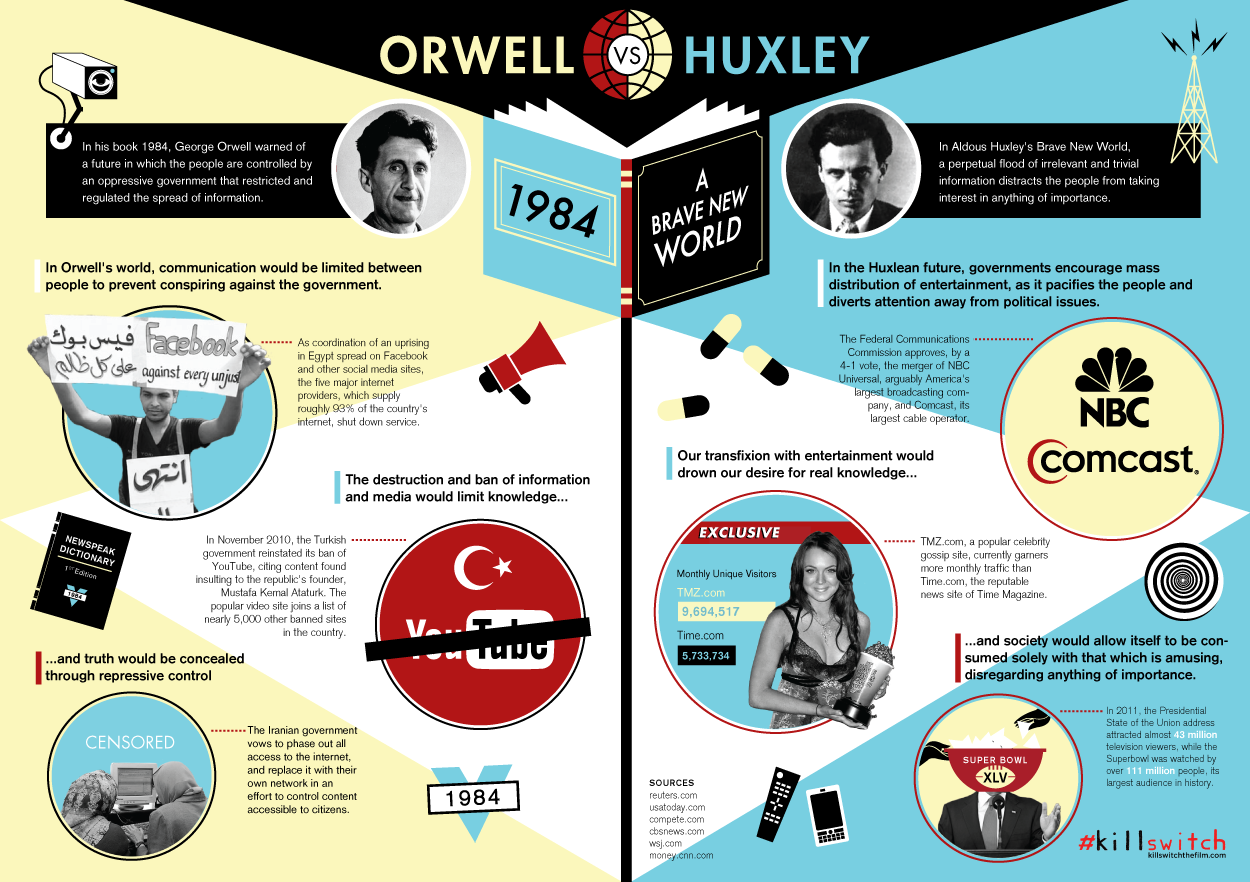
Orwell vs Huxley

Orwell vs Huxley: 1984 vs Brave New World.  
But then, as a comment there points out, we could as well go the whole hog and head to this 1984 speech by Neil Postman: Amusing ourselves to death.

18 Nov 2011

"Privatization Nightmare: 5 Public Services That Should Never Be Handed Over to Greedy Corporations"

Link.

To read, soon.

Oh Those Crazy Brutal Dictators

Treating their own citizens like this:

Shame on 'em.

Advice for Indian Politicians

Who want to make quick money:  Get with the times.  Change your methods.  Learn.  There is an easier way to make easy money.  No taint of the 'C' word attached too!  Link.
As many as a dozen members of Congress and their aides took part in insider trading based on foreknowledge of market moving information on Capitol Hill, disgraced Washington lobbyist Jack Abramoff told CNBC in an interview. 
Abramoff, who was once one of the wealthiest and most powerful lobbyists in Washington before a corruption scandal sent him to federal prison for more than three years, said that many of those members of Congress bragged to him about their stock trading prowess while dining at the exclusive restaurant he owned on Pennsylvania Avenue.
60 Minutes on the same issue:


Hey, if the elected reps of the US are doing it, it must be fine!

PS: Top Favorite Stock Holdings of Congress

American Hypocrisy


As I was reading this 
Arab leaders have given Syrian President Bashar al-Assad three days to halt his ''bloody repression'' of protests or risk sanctions, but activists said security forces shot dead a nine-year-old girl on Thursday.
and thinking how the killing of the 9-year-old will cement the Syrian government's status as the most horrible government that has to be overthrown immediately, this came to my mind: The killing of Awlaki’s 16-year-old son:
Two weeks after the U.S. killed American citizen Anwar Awlaki with a drone strike in Yemen — far from any battlefield and with no due process — it did the same to his 16-year-old son, Abdulrahman al-Awlaki, ending the teenager’s life on Friday along with his 17-year-old cousin and seven other people. News reports, based on government sources, originally claimed that Awlaki’s son was 21 years old and an Al Qaeda fighter (needless to say, as Terrorist often means: “anyone killed by the U.S.”), but a birth certificate published by The Washington Post proved that he was born only 16 years ago in Denver. 
 ... Every now and then it’s worth pausing to reflect on how often we talk about the killing of people by the U.S. Literally, the U.S. government is just continuously killing people in multiple countries around the world. Who else does that? Nobody — certainly nowhere near on this scale. The U.S. President expressly claims the power to target anyone he wants, anywhere in the world, for death, including his own citizens; he does it in total secrecy and with no oversight; and this power is not just asserted but routinely exercised. The U.S., over and over, eradicates people’s lives by the dozens from the sky, with bombs, with checkpoint shootings, with night raids — in far more places and far more frequently than any other nation or group on the planet. Those are just facts.
 That is one hypocritical government.

Yaara Metro Update


Revenue dips
On Reach-1, BMRCL claims that there is an increase in number of regular users of the services, even as the initial euphoria has died down. The revenue on the line has come down drastically compared to the first few days.  
On November 8, 29,233 people travelled in the Metro generating Rs 4.5 lakh while the same was 24,983 and Rs 3.78 lakh, respectively on November 9 and 24,289 and Rs 3.81 lakh on November 10. 
On November 11, 24,874 people travelled generating a revenue of Rs 3.63 lakh but on November 12 (Saturday) it went up to 43,000 and Rs 6.35 lakh.
We need one more inauguration to get the tourists back on the Metro.

'CIC orders RBI to expose 100 top loan defaulters'


In a move to usher in transparency in the functioning of banks, the Central Information Commission (CIC) has directed the RBI to reveal the names and divulge other details of the top 100 businessmen and industrialists defaulting on repaying loans taken from public sector banks. 
The CIC has also directed the country’s Central bank to post the complete information of all such defaulting businessmen and industrialists on its web site as part of a suo motu disclosure mandated under Section 4 of the transparency law, before December 31. The RBI has been directed to update this list every year. 
“There can be no doubt that the information on defaulters received from banks are held by the Reserve Bank in a fiduciary capacity and are confidential in nature,” an RBI official had said while deciding on Kapoor’s RTI application. 
Although Information Commissioner Shailesh Gandhi agreed with the RBI’s argument that such information was fiduciary in nature, he said that exemption could not be allowed when there was larger public interest in the disclosure. 
Gandhi’s argument was that “this (disclosure) could lead to safeguarding the economic and moral interests of the nation. The commission is conv­inced that the benefits accruing to the economic and moral fibre of the country, far outweigh any damage to the fiduciary relationship of bankers and their customers if the details of the top defaulters are disclosed.” 
Absolutely.  Let the names out.  Let us see where the money is going to.  We know that SBI has an exposure of Rs 1,400 crore to Kindfisher Airlines.  Who else has taken PSU bank money?  

In fact, why restrict it to the top 100?  Put it all out there.  Maybe the said businessmen and industrialists will be more careful taking out loans in the first place.  Each public sector bank could put out its own list too.  They are already doing it for the aam defaulters : India's banking lobby asks lenders not to use tough bad loan recovery measures
The Indian Banks Association -- a lobby group for banks -- has asked lenders in the country not to use very harsh measures to recover outstanding loan amounts from their customers, after India's public sector lenders including Corporation Bank and the State Bank of India adopted 'name and shame' tactic to recover bad loans. 
The banks displayed names, photographs and other details of willful loan defaulters on the notice board of its branches from where loan amount has been sanctioned, with a view that through such exercise, the fear of social ostracisation would drive the borrowers to repay dues owed to the bank.

Auditing As Performance Art


Jagathi Publications, whose promoter is Jagan Mohan Reddy of YSR Congress, was valued at Rs 196 crore by a Chennai-based auditing firm Jagadeesan and Co, despite an accumulated loss of Rs 319 crore staring in one's face. 
Not happy with this valuation, Jagathi Publications sought the services of the formidable Ivy League accounting firm Deloitte Touche Tohmatsu India (P) Ltd, which first put a value of Rs 2,500 crore on the business, based on its self-generated business plans for the next five years, and later on inflated it further to a staggering Rs 3,500 crore. 
Nice job folks.

Prediction Time

TCA Srinivasa Raghavan of Business Line does the predicting:

If the Congress manages to form a government in UP, or even manages to win enough number of seats, Rahul Gandhi would have “proved” that he is a mass leader in his own right, one to be reckoned with. 
The path will be then cleared for him to become Prime Minister and to force an early election in the first half of 2013 on the perfectly legitimate grounds that he needs his own team. 
The BJP under Advani will find it hard to come up with a fitting riposte. It needs Narendra Modi but will acknowledge it only after another resounding defeat. 
If Rahul fails in UP, it will be business-as-usual. Manmohan Singh will continue as Prime Minister till 2014; Rahul will become Congress President and the 2014 general election will be a nightmare for the Congress.
Let's see.

The Slow Death Of BSNL


Bharat Sanchar Nigam Ltd has scrapped plans to buy GSM equipment through a 3G-like reverse auction process . The company has instead floated a revised tender with the old system wherein vendors quoting the lowest amount will be selected. 
Though the bids will be made online, the telecom major has done a U-turn on its earlier plan to allow equipment vendors to revise its offer through a reverse auction mechanism.
... BSNL insiders suspect that the change may have happened at the request of some of the equipment vendors which feared that a reverse auction could lead to aggressive price cuts by the Chinese players. “In a reverse auction, the vendor with deep pockets and good financing back up, stand to gain as they would be able to cut down on price. While this is good for BSNL in terms of getting the best price it may edge out some of the bigger European vendors out of the play,” said a market watcher.
...BSNL workers' union, meanwhile, has shot off a letter to the Communications and IT Minister, Mr Kapil Sibal, on the issue. 
“The present tender for procurement of 14.37 million GSM lines through e-tendering could not reach anywhere for the last more than a year, due to sheer incompetence and extremely poor decision-making capabilities. In the meantime, it decided to float new tender, scrapping auction mechanism. This is simply atrocious, fully exposing professional integrity, very poor understanding on part of management and to top it all its total lack of concern as far as revival of BSNL is concerned,” said Mr G.L. Jogi, General Secretary, Sanchar Nigam Executives Association, in a letter sent to the Minister in October.
Why would the government let this kind of thing continue unless they want to kill off BSNL?  Pathetic morons.  Nice work by the European vendors too.  Nice to watch Capitalism at work.

Bt Vt And All That


Since 2002, the country's output has gone up two-and-half times to over 35 million bales this year, which has been brought about by higher acreages (from under 8 million to nearly 12 million hectares) and also a jump in yields (from an average 300 kg of lint to about 500 kg per hectare). 
... the last three or four years have seen yields stagnate, if not fall from the peak 550 kg reached in 2007. Cotton farmers are now grappling with new pests such as pink bollworm and jassids. The leaf curl virus, imported from Pakistan, has reportedly developed into a new form that scientists fear could pose more problems in the years to come.
So Bt was the answer to what question exactly?  But, whatever, they have the solution to the newest pests, though the Indian farmers will have to wait only ten years for it:  
Bollgard III, the advanced version of genetically modified cotton from the US agri-science major Monsanto, is likely to be commercially released in the global market in 2016-17. For India, it could take some more time and could be introduced around 2020, according to a Monsanto official. 
“Bollgard III will have resistance to bollworm, army worm and pink bollworm. It will also be herbicide tolerant,” said Dr Roy Cantrell, Global Cotton Breeding Lead of Monsanto.
As to the problems with Bollgard I, no worries there either:

Asked about reports of poor performance of Bollgard I currently in India, he said it was one of the reasons why farmers were shifting to Bollgard II.

Ah, good old Microsoft business model.  Lock in the customers so that they can't leave, ever.  The question must have been:  How can Monsanto make profits?


For a country that was languishing in cotton production, Brazil has come a long way to become the fifth largest producer in the world. Since 1994, its production has quadrupled, while exports have touched 800,000 tonnes from zero. 
“We have shifted cotton cultivation from the south and south-western parts of our country to the central and western parts,” [Mr Haroldo Cunha, Executive President of the Brazilian Cotton Institute] said. 
This helped because the climate and soil in the central and western parts were conducive to grow cotton in the Cerrados that is like the Savannahs. “More than these, only small farmers had been planting cotton in south and south-western parts of the country, while large growers took to cotton once it was taken up in central and western parts,” said Mr Cunha. 
A cotton producers association was formed to take up various issues of growers with the Government. The association also created a foundation for research that would work in tandem with growers. The growers' body tells the research association of its needs and the latter works accordingly. The Government, too, on its part supports research. Growers contribute $30 a hectare for research. 
“It helped to increase productivity from 770 kg lint (processed cotton) a hectare to 1,450 kg now,” said Mr Cunha. 
Interestingly, the growth in cotton production has not been boosted by genetically modified cotton varieties.
No, really?  No genetically modified cotton varieties?  How can that be?  Why can't we do it in desh? 

'Blind Faith In Private Health'

So what lies behind the Republican obsession with privatization and voucherization? Ideology, of course. It’s literally a fundamental article of faith in the G.O.P. that the private sector is always better than the government, and no amount of evidence can shake that credo. 
The same ideology thrives here too.